A successful event to mark United Nations Human Rights Day 2025 was organised by Liberation in the House of Commons on 11 December.
The event was hosted by Liberation Chair, Brian Leishman MP, and included speakers covering the wide range of human rights issues that are of concern to Liberation members and supporters.
In his opening remarks Mr Leishman emphasised the extent to which governments were increasingly resorting to the use of legislation to suppress dissent, especially protests. In Britain this has resulted in the criminalisation of activist groups and an increase in the use of surveillance, data powers and policing, which has shifted the emphasis in the relationship between the citizen and the state.
Mr Leishman highlighted the global crises taking place in Ukraine, Sudan and in Palestine and was particularly critical of the role of both British and US governments fuelling conflicts through ongoing arms sales.
Speaking about the current situation in Sudan Dr. Amina El Rashid Nail (UN Office for South–South Cooperation) stressed the importance of international law, highlighting the extent and severity of the human rights violations in Sudan, including ethnic targeting, forced displacement, sexual violence and the destruction of hospitals, schools, and essential institutions.
Dr. El Rashid Nail outlined the historical waves of violence which have engulfed Sudan including the mass killings and displacements in Darfur in 2003; the Khartoum sit-in massacre in 2029; and the recent atrocities across many parts of the country.
She went on to criticise the land grabs, militarisation, and external interference while calling for a stronger international response and accurate reporting.
Lord John Hendy KC (Labour peer, trade union lawyer) stressed that trade union rights are fundamental human rights, a fact that is often conveniently overlooked. Lord Hendy drew attention to the fact that Article 11 of the European Convention on Human Rights (ECHR) protects freedom of association and includes the right to strike and the right to collective bargaining.
Lord Hendy gave examples of regressive court decisions which had undermined workers’ rights in Britain and went on to warn that far-right political movements across the globe were seeking to dismantle international labour and human rights institutions.
Azar Sepher: Representative of the Democratic Organisation of Iranian Women (DOIW) condemned US–Israeli military escalation in the Middle East and any foreign intervention in Iran. She outlined the extent of the violations of the Universal Declaration of Human Rights in Iran. She highlighted a range of repressive laws such as the child marriage age being lowered to 9 for girls; the fact that women require spousal permission to travel; restrictions on customs, dress, education; and compulsory hijab enforcement accompanied by state violence.
Ms. Sepher outlined the role of the Women, Life, Freedom movement, which has been active since the murder in custody of Mahsa Amini in September 2022, and the significant role it has played in mobilising women and young people in particular to openly challenge the regime in Iran.
Ms. Sepher indicated the extremely high rate of executions (over 1,100 from Jan–Oct 2025) in Iran and called for greater international pressure to prevent these.
Speaking on the issue of Western Sahara and self-determination, Mark Luetchford (Chair Western Sahara Campaign UK) highlighted the fact that Morocco has occupied the territory for 50 years, violating international law. In that time the Sahrawi people have faced torture, forced disappearance, political imprisonment and an absolute denial of political rights.
The struggle of the Sahrawi people was undermined by Morocco’s demographic engineering through settler expansion; resource theft of phosphates and fisheries; as well as support for the occupation from some Western states including France, Spain and the US.
Mr. Litherland pointed out that promises from the UN of a referendum on self-determination remain unfulfilled and was critical of the failure of the Labour Party to uphold the self-determination principle.
Questions from the audience allowed speakers to expand upon some of the points made.
In concluding the meeting Brian Leishman MP thanked speakers for their input and the audience for questions. He also stressed that MPs do respond to organised pressure (letters, visits, persistent contact) and that they can use APPGs and parliamentary debates to force issues into the political agenda.
He stressed that the work of Liberation in applying this pressure remained vital.
11 December 2025
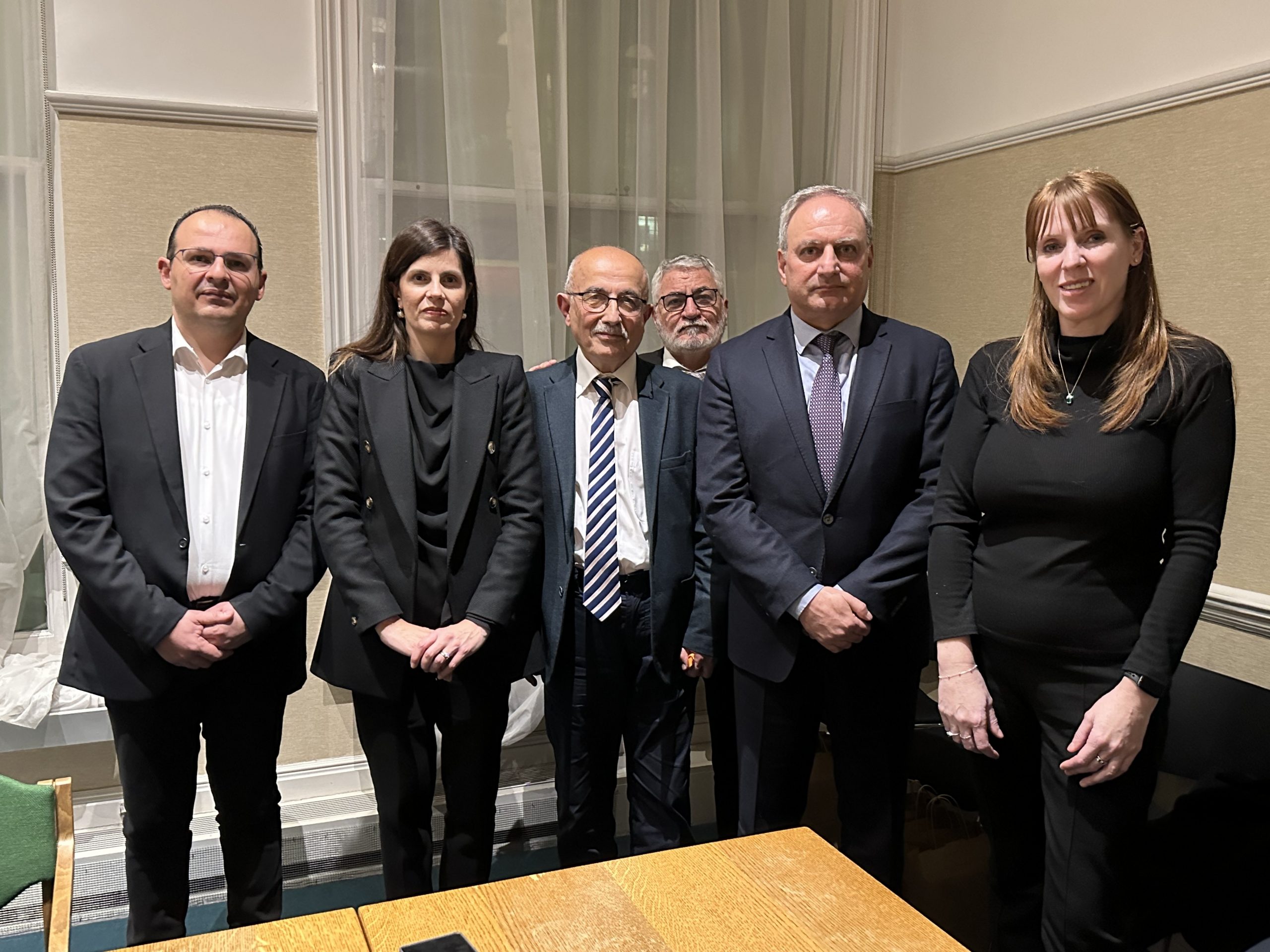
IMage: (Left to Right) Dr. Amina El Rashid Nail, Lord John Hendy KC, Brian Leishman MP, Azar Sepher: